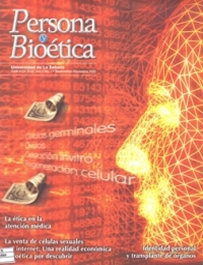
La ética en la atención médica
Abstract
Medical ethics are taught founded on three basic principles: beneficence, autonomy and justice. As much as economic aspects increasingly influence health care systems, justice, that is equity, becomes panoramic. We are experiencing growing conflict between "corporate ethics" of health care institutions such as EPS, ARS and ARP, created upon Bill 100 of 1993, as hallmark of new Social Security General System, and Hippocratic ethics or medical ethics. Such new system is cause of decadence on medicine practice in our country, arising inequity by favoring wealthy affiliates and consequently restraining access and health services to the poor. In this new scheme, faculty public hospitals, as a major entity support of medical education, are in real danger of extinction. Health care based mainly on profit making goals deeply affects notion of social commitment by displacing Hippocratic essential aimed to patient benefit for an economic frame that submits medical practice to commercial oriented management of profession and to the competence of an ill-conceived market. These are ethical dilemmas faced by Colombian medicine practice in frame of social security reform on health care, enacted by Bill 100 of 1993.
Downloads

How to Cite
Issue
Section
License
Authors who publish with this journal agree to the following terms:
This journal and its papers are published with the Creative Commons License Attribution-NonCommercial-NoDerivatives 4.0 International (CC BY-NC-ND 4.0). You are free to share copy and redistribute the material in any medium or format if you: give appropriate credit, provide a link to the license, and indicate if changes were made; don’t use our material for commercial purposes; don’t remix, transform, or build upon the material.